Ukrainian-Norwegian 'Desna' Air Defense: Adapting Anti-Tank Missiles to Counter Drones
The new 'Desna' air defense system will utilize modified anti-tank missiles to intercept enemy drones at low altitudes.
 💡Tech
Photo: UNIAN
Key points
- Use of upgraded RK-2PZ missiles
- Laser guidance and proximity fuzes
- Cost-effective domestic production
- Low-altitude drone defense
Ukraine, in partnership with the Norwegian company Kongsberg, is developing the 'Desna' mobile air defense system, designed to counter Russian drones. The system is based on modified 'Barrier' anti-tank missiles, designated as RK-2PZ, which are equipped with proximity fuze sensors.
Technical Features and Effectiveness
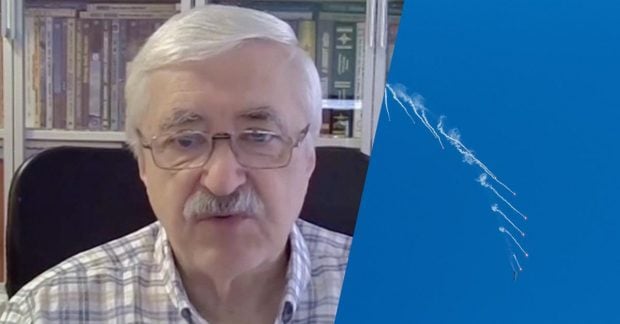
Unlike standard anti-tank projectiles, this anti-aircraft modification is capable of detonating near the target, significantly increasing the probability of downing an aerial object. According to aviation expert Valeriy Romanenko, the missile is guided by a laser beam. The operator must track the drone manually, which requires specific training and coordination.
The 'Desna' system has a limited operational range—up to 4 km in distance and 1.5 km in altitude. This makes it an effective 'last-resort' weapon that can be deployed near critical infrastructure or on the approaches to frontline cities.
Advantages Over Western Alternatives
A key advantage of this complex is its relative cost-effectiveness compared to American missiles used in NASAMS, such as the AIM-120 or AIM-9X. Utilizing domestic developments allows for scaled production, ensuring the Defense Forces have a sufficient supply of ammunition to protect the skies.
Source UNIAN — unian.ua/weapons/ppo-desna-yak-vona-mozhe-zahistiti-prifrontovi-mis… ↗
Read next
 🇺🇦Ukraine
Tragedy in Afghanistan: School Explosion Results in Multiple Casualties
In Kunar province, an explosion at a school left 10 people dead, mostly children. The likely cause is identified as negligent storage of explosive materials nearby.
 🛡️Security
Army financing: why there is a shortage of funds for military payments
Experts explain the lack of funds for military salaries by delays in international aid and the need for urgent weapons purchases from the state budget.
 🛡️Security
23 more Ukrainians return from occupation: stories of rescuing vulnerable groups
The Ukrainian Parliament Commissioner for Human Rights, Dmytro Lubinets, announced the successful return of 23 citizens from temporarily occupied territories.
 🧠AI Analysis
Climate Change: Lightning strikes could double by 2100
Scientists predict a significant increase in the frequency of lightning strikes due to global warming, posing new risks to infrastructure and forests.
 🛡️Security
Night attack on Odesa: residential building damaged, casualties reported
Russian forces launched a drone strike on Odesa on the night of November 29, hitting a residential high-rise. Emergency services and an operational headquarters are provi…
 🛡️Security
Night attack on Odesa: residential building damaged, casualties reported
Russian forces struck Odesa on the night of November 29, damaging a high-rise residential building. Emergency services and an operational assistance headquarters are work…